The Ultimate Guide to TIG Torches Nomenclature and Welder Compatibility
The Ultimate Guide to TIG Torches Nomenclature and Welder Compatibility
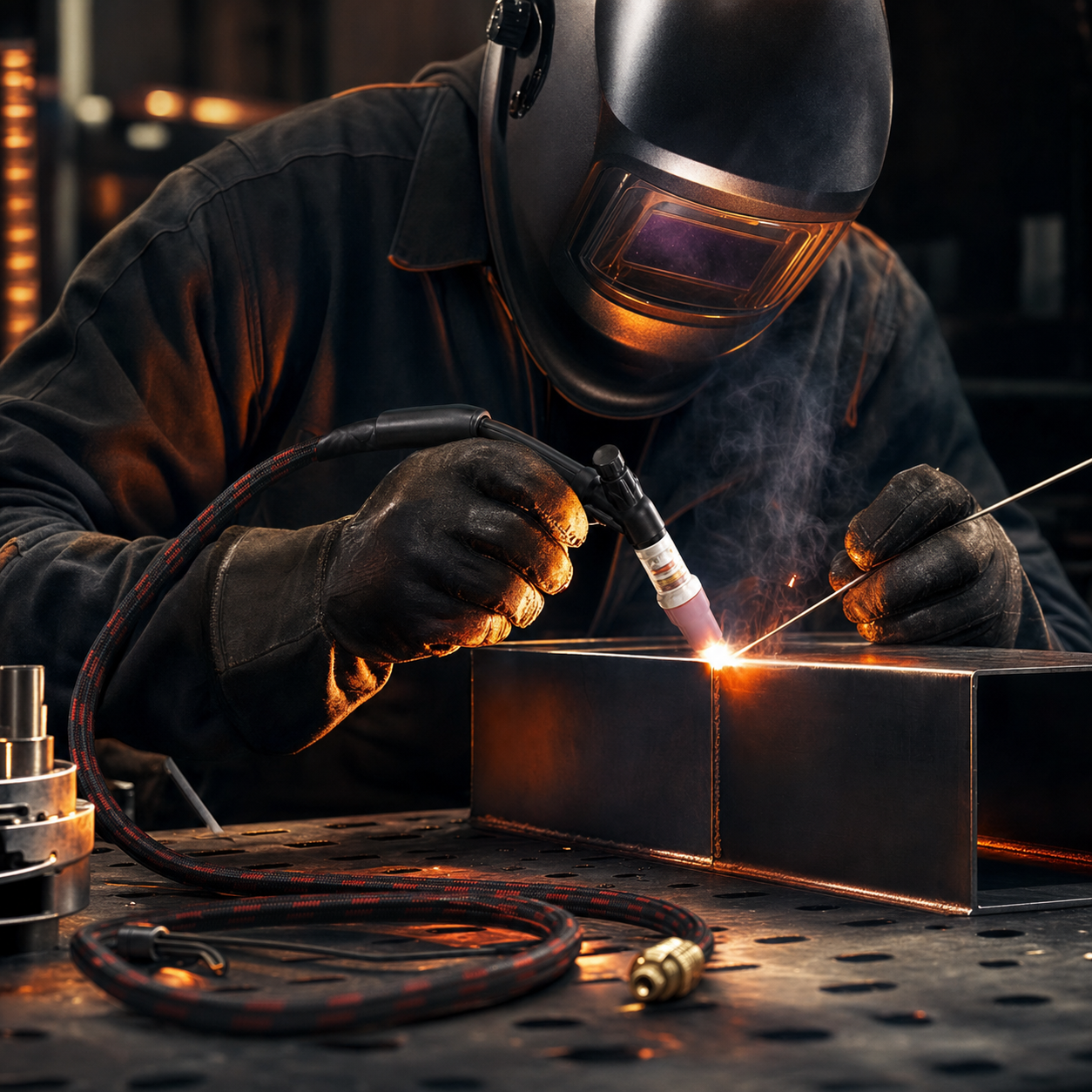
In the high-precision world of Gas Tungsten Arc Welding (GTAW), selecting the correct equipment is not merely a matter of personal preference—it is a critical engineering decision that dictates arc stability, thermal management, and overall operational safety. Industrial procurement managers, professional fabrication workshops, and individual welders frequently navigate an overwhelming marketplace filled with hundreds of hardware options. At the center of this selection process are TIG torches, the essential tools responsible for directing electrical current, sustaining plasma arcs, and delivering flawless protective gas shielding profiles. However, walking into a supply warehouse or browsing an international e-commerce catalog often raises foundational technical questions. Without an exact understanding of industrial classification standards, buying mistakes can happen, leading to mismatched fittings, ruined torch bodies, or costly workshop downtime.
Since its founding in 2010, UPPERWELD has established itself as an elite, global manufacturing powerhouse specializing in high-performance thermal and gas delivery systems. Our extensive product portfolio features widely recognized solutions, including Air Acetylene Torches, Mapp Torches, versatile Garden Torches, and heavy-duty industrial Heating Torches. Driven by an unwavering commitment to strict international quality standards, our products are highly sought after across competitive markets in Europe, North America, South America, the Middle East, Africa, and Australia. Backed by our powerful internal R&D pipelines and innovative engineering capabilities, we continuously deploy next-generation solutions tailored to real-world industrial demands. In this comprehensive, technical guide, we will break down the structural identification codes and machine compatibility metrics of heavy-duty air-cooled and water-cooled welding apparatuses, ensuring your shop makes the perfect procurement choice every single time.
What is the standard nomenclature for TIG torch models?
The standard nomenclature for TIG torches follows a universally recognized alphanumeric classification system originally derived from legacy industry designs. This standardized naming convention allows engineers, distributors, and technicians worldwide to instantly determine a torch's physical size, maximum cooling capacity, and ergonomic configuration simply by reading its model suffix. The system baseline begins with a prefix (typically "WP" or "SR", indicating a basic welding torch archetype), followed by a core number designation (such as 9, 17, 18, 20, or 26) which establishes the basic power group and structural footprint. However, the most critical part of the system lies in the alphabetical suffixes attached to the end of the model number. These letters indicate specific, built-in structural modifications designed to solve distinct fabrication challenges.
Deciphering the Common Suffix Letters in TIG Torches
When selecting your next hardware configuration, understanding the precise meaning of each industrial suffix letter ensures you obtain the exact physical capabilities required for your welding station:
- The Letter "F" (Flexible Neck / Flex-Head): This suffix indicates that the torch body neck is constructed using a specialized, bendable copper alloy covered in durable, flexible silicone rubber. A model like the WP-17F allows the operator to manually bend and shape the angle of the torch head into infinite positions. This is highly beneficial when working inside tight geometric spaces, deep-groove joints, or awkward out-of-position structural pipe frameworks where a rigid torch head would block the welder's field of view.
- The Letter "V" (Gas Valve): This suffix denotes the inclusion of a manual brass gas control valve built directly into the front or side of the torch handle itself. Torches featuring this code, such as the WP-26V, are specifically engineered for older or entry-level welding machines that lack an internal, electronically controlled gas solenoid valve. By manually spinning the valve open before striking an arc, and spinning it closed after completing a weld bead, operators can achieve complete argon gas management on basic stick (SMAW) power sources modified for scratch-start or lift-arc TIG operations.
- The Letter "R" (Rubber Cable Over-Armor): Often appended to denote the cable assembly type, this indicates that the internal copper lines are protected by a premium, high-flexibility rubber material rather than rigid, inexpensive vinyl covers. High-grade rubber remains flexible in freezing workshop temperatures and resists melting when accidentally exposed to stray sparks or hot weld spatter.
- The Combined Suffix "FX" or "V-FX" (Flex-Neck with Gas Valve / Special Suffixes): Modern multi-process manufacturing requires maximum adaptability. Therefore, manufacturers frequently blend configurations. A model designated as a WP-17V-FX or WP-26F-V incorporates both a manual gas control valve on the handle handle and a fully flexible neck mechanism, providing the absolute peak of utility for mobile field-repair technicians.
Understanding Core Number Categories
The numbers within the standard nomenclature are divided into two primary structural families based on their heat dissipation engineering. The air-cooled (or gas-cooled) family utilizes ambient room air and the flow of argon gas to cool the internal copper components, while the water-cooled family requires an external radiator system to cycle liquid coolant through hollow power lines:
- Air-Cooled Class (Numbers 9, 17, 26): The WP-9 is the smallest, micro-profile layout designed for low-amperage precision sheet metal work. The WP-17 is the mid-sized general-purpose industrial standard, and the WP-26 is the large, heavily insulated heavy-duty variant designed to handle high-amperage structural plate fabrication without melting.
- Water-Cooled Class (Numbers 18, 20): These models feature smaller physical dimensions but vastly higher power capacities. The WP-20 is a micro-sized torch roughly identical in size to the air-cooled WP-9, yet it can safely handle up to 250 Amps because water continuously extracts the heat. The WP-18 is a large industrial powerhouse capable of sustaining continuous, automated 350-400 Amp production cycles.
How do I choose the right TIG torch series for my welding machine?
To choose the right TIG torches series for your specific welding machine, you must analyze three essential engineering cross-sections: the maximum power capability of your power source, the specific metal alloys you intend to fabricate, and the physical interface connection style built into the front panel of your machine. Buying a torch based solely on visual appearance frequently leads to mismatched connections or catastrophic hardware failure. By utilizing a systematic evaluation process, you can maximize your equipment investment and ensure seamless compatibility across your entire workshop production line.
Step 1: Match the Torch Amperage to Your Machine’s Maximum Power Output
Your welding machine features a maximum electrical current output rating (e.g., a 160A, 200A, or 300A machine). Your chosen torch series must have a thermal capacity equal to or greater than the maximum current you plan to run. If you connect a lightweight WP-9 torch (rated for 125 Amps DC) to a heavy industrial 250 Amp welding machine and crank the dial up to weld half-inch steel plate, the internal copper joints inside the torch head will melt within minutes. Conversely, using a heavy, bulky WP-26 torch on a micro 110V household inverter welder will cause unnecessary hand strain and limit your ability to execute delicate, fine-wire precision repairs.
Step 2: Evaluate the Power Source Technology (AC/DC vs. DC-Only)
The type of welding current your machine delivers heavily impacts the thermal stresses placed on TIG torches. Alternating Current (AC), which is required for breaking through the tough surface oxides of aluminum and magnesium, splits the heat generation between the tungsten electrode and the torch body. This causes torches to heat up significantly faster than when operating on Direct Current Straight Polarity (DCEN) used for stainless steel and carbon steel fabrication. If your welding machine is a dedicated AC/DC TIG unit used for high-frequency aluminum fabrication, you must proactively derate your air-cooled torches, or upgrade to a water-cooled setup to handle the aggressive thermal feedback of AC cycles.
Step 3: Identify the Front Panel Interface Adapter Style
The physical connection point on the front of your welding power source varies drastically based on the manufacturer, geographic region, and generation of the machine. To ensure a secure fit, you must identify your machine's connection layout:
- Dinse Style Connectors (International Standard): These are cylindrical brass male plugs that slide into a female machine receptacle and twist 90 degrees clockwise to lock securely in place. They come in two primary industrial cross-sectional sizes: the smaller Dinse 10-25 (roughly 9mm diameter pin) found on light-duty portable units, and the heavy-duty Dinse 35-70 (roughly 13mm diameter pin) found on large multi-process and professional industrial power sources.
- Lug-Style Connectors (Stud Connections): Frequently found on heavy, traditional industrial transformer welding machines, these require a flat copper ring terminal (lug) to slide over a threaded steel post, secured firmly in place with a heavy wing nut or hex nut.
- Gas and Control Lines Isolation: Depending on whether your machine features an internal gas solenoid or an external gas source, you must choose between a one-piece power cable design (where the shielding gas flows directly through a hollow power block adapter) or a two-piece cable setup (where power and gas run through independent lines). Newer digital machines also feature multi-pin electrical control receptacles (ranging from 2-pin to 14-pin configurations) to connect remote foot pedals or hand-held torch amperage switches.
Industrial Technical Comparison Matrix: Nomenclature, Amperage, and Connections
To streamline the procurement and warehouse provisioning process for international buyers and engineering managers, the following industrial reference matrix details the technical differences across standard air-cooled and water-cooled TIG torches configurations:
| Torch Model | Cooling Type | DC Rating (Amps) | AC Rating (Amps) | Suffix Adaptations Available | Typical Machine Pin Fitment |
|---|---|---|---|---|---|
| WP-9 Series | Air-Cooled | 125A | 90A | F, V, FX | Dinse 10-25 / Gas Through Block |
| WP-17 Series | Air-Cooled | 150A | 115A | F, V, FX, R | Dinse 10-25 or Dinse 35-70 |
| WP-18 Series | Water-Cooled | 350A | 250A | F, R (Heavy Duty) | Dinse 35-70 With Water Couplers |
| WP-20 Series | Water-Cooled | 250A | 250A | F, FX | Dinse 35-70 With Water Couplers |
| WP-26 Series | Air-Cooled | 200A | 150A | F, V, FX, R | Dinse 35-70 / Separate Gas Hose |
Deep-Dive Mechanical Analysis: Adapting Advanced Suffixes into Production
Integrating advanced suffix models into your assembly line requires a thorough cost-benefit analysis. For instance, outfitting a field maintenance team with a series of WP-26V-FX (Valve + Flex Neck) torches provides massive long-term benefits for structural repair work. When a structural technician is working beneath an off-road mining vehicle or high-altitude piping system, they often cannot carry a massive multi-process machine close to the workpiece. By using a torch with an integrated gas valve ("V"), they can attach their system directly to a portable engine-driven generator or standard stick welder, utilizing scratch-start TIG parameters while maintaining control over their shielding gas consumption.
Simultaneously, the flexible neck ("F") adaptation eliminates the risk of joint contamination caused by awkward torch angles. When a manual welder is forced to hold a rigid torch at a steep angle to navigate around a structural bracket, the shielding gas envelope becomes distorted, drawing atmospheric air into the molten puddle. By simply bending the flexible silicone neck to the perfect ergonomic offset, the welder can keep the ceramic gas cup completely perpendicular to the weld pool, achieving clean, uniform, silver-and-gold colored weld beads that pass strict X-ray testing protocols.
At UPPERWELD, we ensure these flexible mechanisms are engineered using high-purity, multi-strand copper cores capable of withstanding tens of thousands of flex cycles without suffering internal micro-fractures or drop-offs in electrical conductivity. This uncompromising approach to manufacturing quality control guarantees that every product we deliver performs reliably under heavy industrial use.
In-Depth FAQ Section: Nomenclature and Machine Compatibility
Q1: Can I convert a rigid TIG torch into a flexible-neck torch in the workshop?
A: No, you cannot convert a standard rigid torch body into a flexible neck model manually. Rigid TIG torches feature a solid cast brass internal core designed for structural rigidity and direct heat transfer. Attempting to mechanically force a rigid torch neck to bend will permanently fracture the internal brass casting and destroy the silicone protective insulation layer. If your workflow requires multi-angle access, you must purchase a dedicated model with the "F" suffix (e.g., WP-17F) manufactured specifically with a bendable internal copper-alloy element.
Q2: What happens if I connect an air-cooled torch to a machine set to high-frequency AC output?
A: High-frequency alternating current generates rapid heat fluctuations that place severe thermal stress on the torch insulation. While you can safely run an air-cooled torch on AC output for materials like aluminum, you must monitor your duty cycle closely. Running a WP-17 at its limit on continuous AC welding will cause it to heat up much faster than it would under DC parameters. For high-volume, automated, or heavy-duty aluminum welding, upgrading to a water-cooled model like the WP-20 is highly recommended.
Q3: Why are Dinse 10-25 and Dinse 35-70 connectors not interchangeable, and how can I fix a mismatch?
A: The numbers "10-25" and "35-70" represent the cross-sectional area of the welding cable in square millimeters that the connector pins are engineered to support safely. A Dinse 10-25 pin is roughly 9mm in diameter, whereas a Dinse 35-70 pin is significantly thicker at approximately 13mm to handle higher amperages without overheating. If you have a mismatch between your torch lead and the welding machine panel, you can resolve the issue using a heavy-duty brass Dinse adapter block or by swapping out the power cable connector assembly to match the machine's receptacle.
Q4: How does UPPERWELD guarantee that its specialized torches meet international quality benchmarks?
A: Every product designed and manufactured by UPPERWELD undergoes a strict, multi-tier quality control protocol. From sourcing high-grade, raw copper and resilient silicone compounds to executing high-precision CNC thread machining and insulation stress-testing, we meticulously monitor every production phase. Our internal R&D teams actively refine our structural blueprints based on real-world market feedback, ensuring our systems excel in tough, high-amperage industrial environments worldwide.
Partner with UPPERWELD: Secure a Highly Optimized Global Manufacturing Pipeline
In a global marketplace filled with shifting supply chains, fluctuating manufacturing regulations, and intense economic competition, choosing a reliable industrial manufacturing partner is the ultimate key to achieving stable business growth. Whether you manage a nationwide network of industrial supply warehouses, oversee large-scale commercial manufacturing facilities, or run a high-volume international e-commerce brand, your operational profitability depends directly on the reliability of your hardware components. Since 2010, UPPERWELD has built an unyielding global reputation by manufacturing premium TIG torches and specialized thermal systems that consistently meet and exceed international quality standards.
We approach modern economic challenges as vital opportunities for deep, win-win cooperation and long-term shared success. By partnering with UPPERWELD, your enterprise gains immediate access to our advanced engineering R&D networks, robust supply chain resources, and a dedicated post-purchase technical support team. Don't allow inconsistent component quality or fragmented supply networks to hold back your workshop's production efficiency or impact your bottom line.
引导Are you ready to optimize your industrial procurement channels or upgrade your production capabilities with the market's most reliable welding solutions? Connect with our international procurement support office today to receive customized volume-based wholesale quotes, discuss personalized OEM/ODM manufacturing parameters, or establish an exclusive regional distribution partnership. Let us build, expand, and share an incredibly prosperous, high-precision future together!