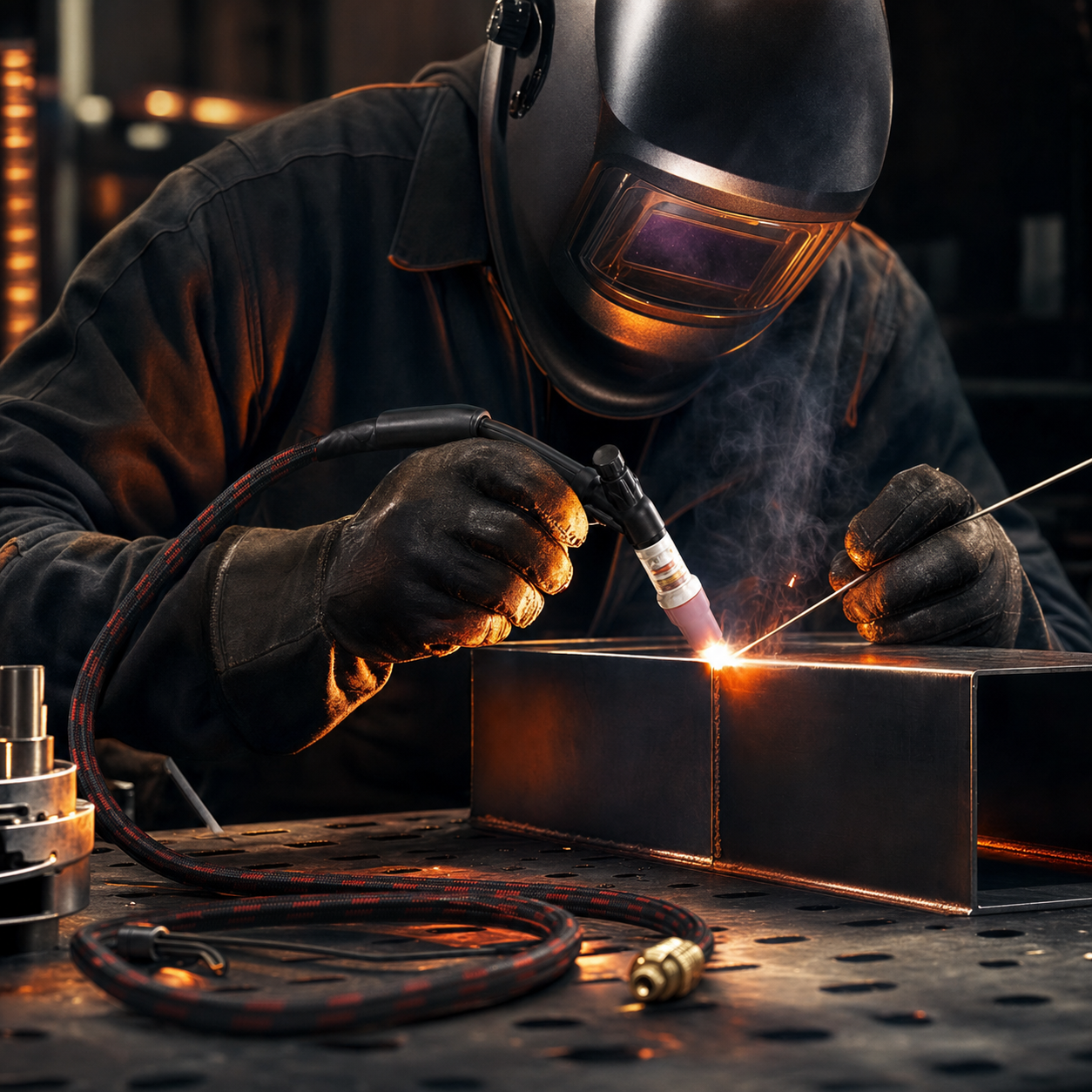
TIG Torches Guide: Amperage Limits, Overheating Fixes & Buying Tips
TIG Torches are the single most important tool standing between a welder and a clean, precise weld. Whether you're working on thin stainless steel sheet, aluminum frames, or heavy-duty structural components, the performance, cooling capacity, and amperage rating of your TIG Torches directly determine your weld quality, productivity, and safety on the job. Yet many welders — from hobbyists to professional fabricators — run into two very common and closely related problems: not knowing the amperage limits of their air-cooled torch, and dealing with torches that overheat mid-weld.
In this guide, we'll answer both of these critical questions in detail, walk through the different types of TIG Torches available on the market, compare air-cooled and water-cooled systems, and give you practical, field-tested tips to keep your torch running cool, efficient, and long-lasting. Whether you're sourcing TIG Torches for a workshop, a production line, or a welding supply business, this guide will help you make an informed decision.
What Is the Maximum Amperage for an Air-Cooled TIG Torch?
One of the most frequently asked questions among welders shopping for TIG Torches is: how much amperage can an air-cooled torch actually handle? The answer depends on the torch's size, design, duty cycle rating, and the manufacturer's specifications — but there are clear general guidelines that apply across the industry.
Air-cooled TIG Torches typically fall into three amperage classes:
| Torch Size | Common Model Range | Maximum Amperage (Air-Cooled) | Typical Duty Cycle | Best Suited For |
|---|---|---|---|---|
| Small/Compact Torch | 9 Series | Up to 120–125A | 35–60% | Thin sheet metal, precision work, hobbyist use |
| Medium Torch | 17 Series | Up to 150A (DC) / 130A (AC) | 60% | General fabrication, light industrial use |
| Heavy-Duty Torch | 26 Series | Up to 200A (DC) / 180A (AC) | 60% | Structural welding, thicker materials, extended sessions |
As a general rule, most air-cooled TIG Torches are rated for a maximum of 200 amps on DC current, with somewhat lower limits on AC (typically around 130–180A) because AC welding generates more heat due to the alternating current cycle. Beyond this threshold, air cooling alone cannot dissipate the heat fast enough, and the torch, cable, and collet body risk thermal damage.
It's important to note that these amperage ratings are almost always tied to a duty cycle — the percentage of a 10-minute period the torch can operate continuously before it needs to cool down. A torch rated for 200A at 60% duty cycle means it can run at that amperage for 6 minutes out of every 10 before requiring a rest period. Exceeding both the amperage and duty cycle simultaneously is the fastest way to damage a torch.
Key Factors That Affect Air-Cooled Amperage Limits
- Cable gauge and length: Thicker, shorter cables carry more current with less resistance heating.
- Torch head design: Larger torch heads with more surface area dissipate heat more efficiently.
- Current type (AC vs DC): DC welding produces more concentrated, stable heat; AC welding (common for aluminum) tends to run hotter due to arc reignition each half-cycle.
- Ambient shop temperature: Hot environments reduce the effective cooling capacity of an air-cooled torch.
- Collet and collet body condition: Worn or loose components create resistance points that generate excess heat.
If your welding application regularly requires amperage above 200A, or if you're running long, continuous welds at high current, it's time to consider stepping up to a water-cooled TIG torch — which we'll cover in more detail later in this guide.
Why Does My TIG Torch Get Too Hot During Welding?
Overheating is one of the most common complaints welders have about their TIG Torches, and it's also one of the most preventable. When a torch overheats, it doesn't just make the job uncomfortable — it can lead to melted torch bodies, damaged O-rings, burnt cables, inconsistent arc quality, and even complete torch failure. Understanding the root causes helps you fix the problem quickly and avoid costly downtime.
1. Exceeding the Torch's Rated Amperage
This is the number one cause of overheating. Every TIG torch — air-cooled or water-cooled — has a maximum amperage rating tied to a specific duty cycle. Running a 150A-rated torch at 180A, even briefly, generates heat faster than the torch is designed to dissipate. Over time, this leads to internal component breakdown, even if the torch doesn't fail on the very first overload.
2. Using an Air-Cooled Torch for High-Amperage or Long-Duration Welds
Air-cooled TIG Torches rely purely on ambient air flowing around the torch body and cable to dissipate heat. This works well for short welds at moderate amperage, but for production environments with long, continuous welds above 150–180A, air cooling simply can't keep pace. This is one of the clearest signs it's time to upgrade to a water-cooled system.
3. Insufficient or Malfunctioning Water Flow (Water-Cooled Torches)
For water-cooled TIG Torches, overheating is often caused by inadequate coolant flow — whether from a clogged water line, a failing water pump/cooler unit, a kinked hose, or low coolant levels. Water-cooled torches depend entirely on consistent circulation; even a brief interruption can cause rapid overheating.
4. Poor Electrical Connections
Loose or corroded connections at the collet, collet body, back cap, or power cable create resistance. Resistance generates heat. A torch that feels unusually hot even at low amperage often has a connection issue rather than a cooling issue.
5. Incorrect Gas Flow or Gas Lens Setup
Shielding gas doesn't just protect the weld pool — proper gas flow also helps carry some heat away from the torch cup and nozzle area. Too low a gas flow rate, a damaged nozzle, or an incorrectly sized gas lens can all contribute to localized overheating around the torch head.
6. Worn or Damaged Torch Components
Cracked cups, worn collets, damaged O-rings, and degraded cable insulation all reduce a torch's ability to manage heat effectively. Regular inspection and timely replacement of consumables is essential for maintaining safe operating temperatures.
Quick Troubleshooting Table: TIG Torch Overheating
| Symptom | Likely Cause | Recommended Fix |
|---|---|---|
| Torch handle gets hot within minutes | Amperage exceeds torch rating | Switch to a higher-rated torch or reduce amperage |
| Overheating despite low amperage use | Loose collet/collet body connection | Clean and re-tighten all connections |
| Water-cooled torch overheating suddenly | Coolant flow interrupted | Check pump, hoses, and coolant level |
| Nozzle/cup area overheating | Incorrect gas flow rate | Adjust flow rate to manufacturer spec (15–20 CFH typical) |
| Cable feels hot along its length | Undersized cable for amperage used | Upgrade to a heavier-duty torch/cable assembly |
Air-Cooled vs. Water-Cooled TIG Torches: Which One Do You Need?
Choosing between air-cooled and water-cooled TIG Torches comes down to your typical amperage range, weld duration, and work environment.
- Choose air-cooled TIG Torches if: You typically weld below 150–200A, work in short bursts rather than continuous long welds, need a lighter and more maneuverable torch, or work in a mobile/field environment without access to a water cooler unit.
- Choose water-cooled TIG Torches if: You regularly weld above 200A, run long continuous welds in production settings, work with thicker materials that require sustained heat input, or want maximum torch longevity in high-duty-cycle environments.
How to Extend the Life of Your TIG Torch
Regardless of amperage rating or cooling method, proper care significantly extends the working life of any TIG torch. Here are best practices we recommend to every customer:
- Always match your torch's rated amperage to your welding application — never exceed it, even briefly.
- Inspect and clean the collet, collet body, and back cap regularly to prevent resistance-related heat buildup.
- For water-cooled torches, check coolant levels and flow rate before every shift.
- Replace worn cups, collets, and O-rings promptly rather than waiting for failure.
- Store torches properly to avoid cable kinks and insulation damage.
- Allow the torch adequate cool-down time between long or high-amperage welds, respecting its rated duty cycle.
Frequently Asked Questions About TIG Torches
What amperage range do most TIG Torches cover?
Most TIG Torches on the market cover a range from as low as 10A for micro-welding applications up to 500A for heavy industrial water-cooled torches. Air-cooled torches generally top out around 200A, while water-cooled torches can handle 300A to 500A or more.
Can I use an air-cooled TIG torch for aluminum welding?
Yes, many air-cooled TIG Torches can weld aluminum, but because AC welding (used for aluminum) generates more heat than DC, the effective maximum amperage is typically lower than the torch's DC rating. Always check the AC-specific rating before welding aluminum at higher currents.
How do I know if my TIG torch is undersized for my work?
Signs of an undersized torch include frequent overheating, a torch handle that becomes uncomfortably hot within a few minutes, inconsistent arc performance during longer welds, and visible discoloration or melting on the torch body or cable near the head.
Is it normal for a TIG torch to feel warm during use?
Yes, a certain amount of warmth is completely normal, especially with air-cooled torches operating near their upper amperage range. However, the torch should never become too hot to hold comfortably or show signs of melting, cracking, or smoking — these indicate a genuine overheating problem that needs to be addressed.
How often should TIG torch consumables be replaced?
This varies by usage intensity, but as a general guideline, collets and collet bodies should be inspected weekly in production environments and replaced as soon as wear, looseness, or damage is visible. Cups and nozzles should be checked for cracks after every welding session.
Get High-Performance TIG Torches from UPPERWELD
Since 2010, UPPERWELD has been designing and manufacturing high-quality welding and torch products trusted by customers across Europe, North America, South America, the Middle East, Africa, and Australia. Our commitment to strict quality control, rigorous international standards, and continuous R&D-driven innovation means every torch we produce is built to perform reliably — session after session, weld after weld.
Whether you need a durable air-cooled TIG torch for precision fabrication or a heavy-duty water-cooled system for high-amperage production welding, our team is ready to help you find the right fit for your application. We back every product with dependable after-sales support because we believe great products deserve great service.
Ready to upgrade your welding setup? Contact UPPERWELD today to explore our full range of TIG Torches and get expert recommendations tailored to your amperage requirements, welding environment, and production needs. Reach out to our team for a quote, product catalog, or technical consultation — and experience the quality and service that has made UPPERWELD a trusted partner in the welding industry worldwide.