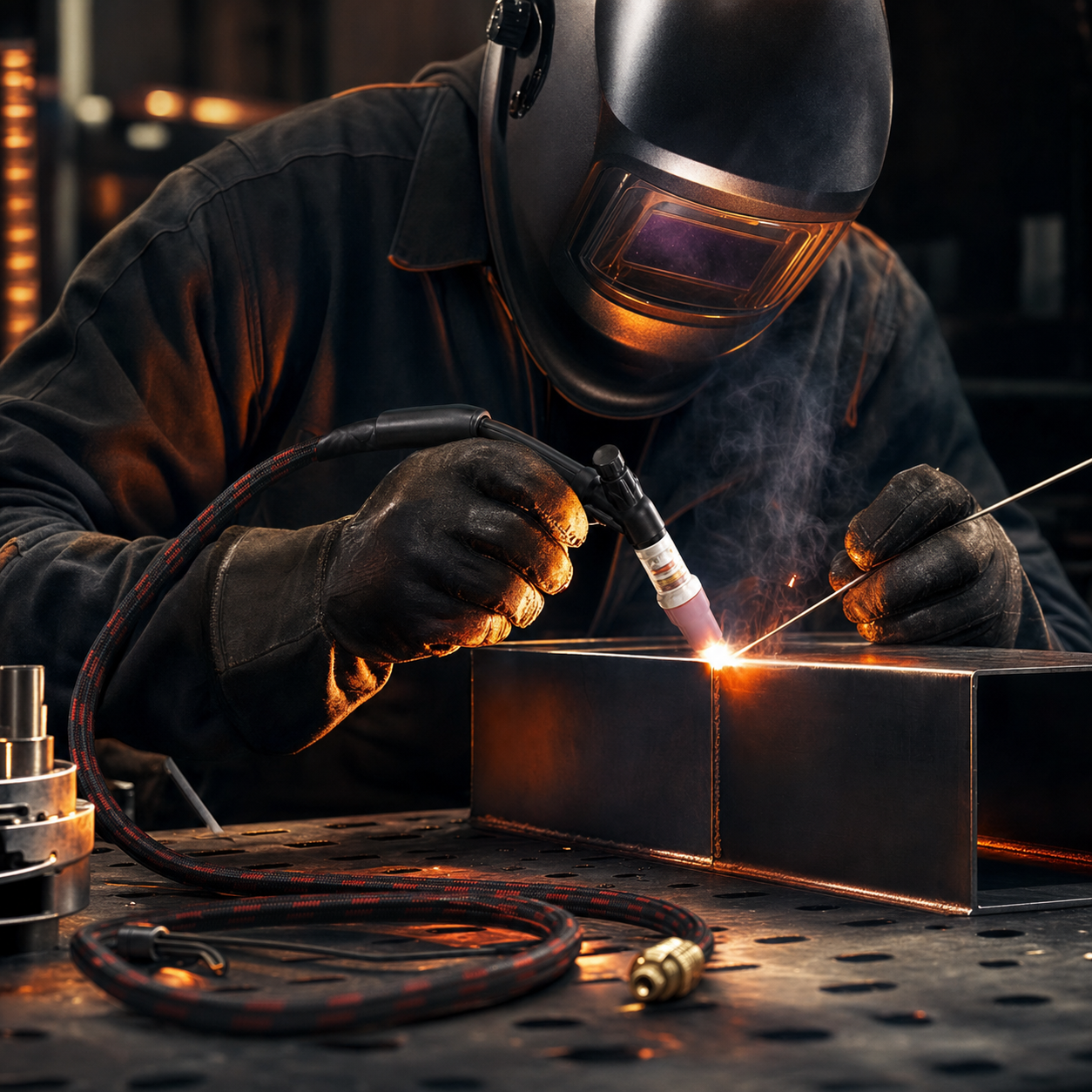
TIG Torches: How to Choose the Right TIG Torch Series for Your Welding Machine
TIG Torches are one of the most important components in a TIG welding setup. Even if you have a powerful and stable welding machine, the final welding quality, operator comfort, arc control, shielding gas performance, and working efficiency are all strongly influenced by the TIG torch you choose. For welding distributors, hardware retailers, fabrication shops, and professional welders, understanding how to select the correct TIG torch series is essential for reducing downtime, improving weld consistency, and matching the torch to real working conditions.

Choosing the right TIG torch is not only about selecting a torch that can connect to your welding machine. It also involves understanding amperage capacity, cooling method, torch head style, cable connector type, gas connection, control switch options, consumable compatibility, and the standard nomenclature used for TIG torch models. If the torch series is not suitable for the machine or application, welders may experience overheating, unstable arcs, gas leakage, uncomfortable handling, or premature consumable wear.
In this complete guide, we will explain how to choose the right TIG torch series for your welding machine and how to understand the standard nomenclature for TIG torch models. The article is designed for buyers who want to make better purchasing decisions and for businesses looking to source reliable TIG Torches for professional welding markets.
UPPERWELD was founded in 2010 and provides various welding and heating products, including Air Acetylene Torch, Mapp Torch, Garden Torch, Heating Torch, and related gas equipment. With strong R&D and innovative capability, UPPERWELD develops products according to market requirements and focuses on qualified products, strict quality control, careful packaging, and dependable service for customers in Europe, North America, South America, the Middle East, Africa, Australia, and many other regions.
How do I choose the right TIG torch series for my welding machine?
To choose the right TIG torch series for your welding machine, you need to match the torch to the machine output, cooling method, welding amperage, connector style, gas supply system, working environment, and operator preference. A correct TIG torch series should safely handle the machine’s current range, connect properly to the welder, provide enough cooling for the duty cycle, and support the welding positions and materials you commonly work with.
For many users, the most common mistake is choosing a TIG torch only by appearance or price. However, two TIG Torches that look similar may have very different amperage ratings, head sizes, cable structures, connector systems, and consumable compatibility. A small air-cooled torch may be comfortable for fine stainless steel work, but it may overheat quickly during continuous high-amperage welding. A heavy-duty water-cooled torch may be ideal for production welding, but it may be unnecessary for light repair work and may require an additional water cooler.
The right choice depends on several key factors. Below is a practical selection framework you can use before purchasing TIG Torches for your welding machine.
1. Check whether your welding machine supports TIG welding
Before selecting a TIG torch series, confirm that your welding machine supports TIG welding. Some machines are dedicated TIG welders, while others are multi-process machines that support TIG, MMA/stick, and sometimes MIG welding. A dedicated TIG machine usually offers better TIG control functions, such as high-frequency start, lift start, pre-flow, post-flow, slope control, pulse settings, AC balance, and remote amperage control.
If your machine is a basic DC inverter welder with lift TIG capability, you may need a TIG torch with a gas valve because the machine may not have an internal solenoid valve to control shielding gas. If your machine has a built-in gas solenoid and TIG control socket, you can usually use a TIG torch without a manual gas valve, and gas flow is controlled by the machine when the torch switch is pressed.
This is why understanding your welding machine is the first step. You should check the user manual, machine front panel, connector layout, and TIG function type. The torch must match both the electrical output and the control system of the welder.
2. Match the TIG torch amperage rating to your welding application
The amperage rating is one of the most important factors when choosing TIG Torches. Every TIG torch series has a current capacity, often expressed as a maximum amperage under certain cooling conditions and duty cycle. If the torch is used beyond its rated capacity, the torch body, cable, handle, collet body, and tungsten may overheat, reducing service life and operator safety.
Light-duty welding of thin stainless steel, carbon steel, copper alloy, or small components may require only a compact torch in the 125A to 150A range. General fabrication, repair work, and medium-thickness materials often require 150A to 200A capability. Heavy-duty industrial welding may require 250A, 300A, or higher, especially when welding thick aluminum or running long welds at high current.
As a general rule, choose a torch with a higher amperage capacity than your most common welding current. For example, if your typical welding current is around 120A, a 150A torch may be suitable. If you often weld at 180A, a 200A or higher-rated torch is a better choice. If your machine can output 250A or more and you regularly use high current, you should consider a water-cooled TIG torch series.
3. Decide between air-cooled TIG Torches and water-cooled TIG Torches
TIG Torches are commonly divided into air-cooled and water-cooled types. Air-cooled torches dissipate heat through the torch body, cable, and surrounding air. They are simple, portable, cost-effective, and suitable for many workshop and repair applications. Water-cooled torches use circulating coolant to remove heat from the torch head and cable, allowing higher amperage and longer duty cycles.
Air-cooled TIG Torches are popular because they do not require a water cooler. They are easier to set up and usually have lower initial cost. They are ideal for mobile repair, field welding, maintenance work, and light to medium-duty fabrication. However, at high amperage or long welding periods, air-cooled torches can become hot and uncomfortable.
Water-cooled TIG Torches are designed for demanding applications. They are often used in aluminum welding, stainless steel production, pipe welding, pressure vessel work, and continuous manufacturing. Because cooling water removes heat efficiently, water-cooled torch heads can often be smaller and more comfortable than air-cooled torches with similar current capacity. The downside is that they require a water cooler, coolant hoses, and more setup space.
| Cooling Type | Best For | Advantages | Limitations |
|---|---|---|---|
| Air-Cooled TIG Torches | Repair work, maintenance, light fabrication, mobile welding | Simple setup, lower cost, portable, no water cooler required | May overheat during long welds or high-amperage work |
| Water-Cooled TIG Torches | Production welding, aluminum welding, high-amperage applications | Better cooling, longer duty cycle, compact torch head at high current | Requires water cooler, coolant lines, and more maintenance |
4. Select the proper TIG torch series based on torch size and current capacity
Different TIG torch series are designed for different power levels and working conditions. Common TIG torch series include compact, medium-duty, and heavy-duty models. Some of the most recognized model families are often referred to by numbers such as 9, 17, 18, 20, 26, and related variations. The exact naming can vary by supplier, but the general meaning is based on torch size, cooling method, and current capacity.
A smaller torch series is easier to maneuver and is suitable for precision welding, thin materials, and confined areas. A larger torch series usually provides higher amperage capacity and greater heat resistance, but it may feel heavier and less flexible in tight spaces. The correct choice depends on the balance between comfort and performance.
| TIG Torch Series | Typical Cooling Type | General Application | Selection Notes |
|---|---|---|---|
| WP-9 Style | Air-Cooled | Precision welding, thin stainless steel, light-duty work | Compact and lightweight; not ideal for high current |
| WP-17 Style | Air-Cooled | General TIG welding, repair, fabrication | Popular all-purpose choice for many welders |
| WP-18 Style | Water-Cooled | High-amperage welding, production work | Requires water cooling system |
| WP-20 Style | Water-Cooled | Precision work at higher current, pipe welding | Small head with strong cooling performance |
| WP-26 Style | Air-Cooled | Medium to heavy-duty welding | Higher capacity than smaller air-cooled torches, but larger in hand |
When sourcing TIG Torches, product titles should be clear and readable. For example, a product title such as “WP-17 Air-Cooled TIG Torch with Flexible Neck and Gas Valve” is much more informative than a short code-only title. Clear product titles help customers understand cooling method, torch series, neck style, and control type before clicking.
5. Confirm the connector type for your welding machine
The connector is another critical factor. Even if the TIG torch series is suitable for your welding current, it must physically and electrically connect to your welding machine. Different welders may use different power connectors, gas connectors, control plugs, and quick-connect fittings.
Common connection considerations include:
- Power connector: The torch cable must match the welder output socket, such as DINSE-style connectors or other machine-specific fittings.
- Gas connector: The torch gas line must connect properly to the gas outlet or external regulator system.
- Control plug: If using a torch switch, the switch plug must match the machine socket and pin configuration.
- Water fittings: Water-cooled TIG Torches require inlet and outlet coolant connections compatible with the cooler and machine.
- Remote control compatibility: Some advanced setups use a foot pedal, finger control, or torch-mounted amperage control.
Before purchasing, compare the torch connector specifications with your welding machine. If you are buying for resale, it is useful to offer different connector options or clearly list compatible machines and adapter availability.
6. Choose the correct starting method: high frequency start, lift start, or scratch start
TIG welding machines may use different arc starting methods. The torch itself must be suitable for the machine’s starting method and control style. High-frequency start allows the arc to start without touching the workpiece, helping reduce tungsten contamination and improving arc initiation. Lift start requires touching the tungsten to the workpiece and lifting it away to begin the arc. Scratch start is a more basic method, similar to striking a match, and is more common on simple TIG setups.
If your machine has high-frequency TIG start and a gas solenoid, a torch with a switch is often preferred because the machine controls gas flow and arc start. If your machine is a simple lift TIG setup without gas control, a torch with a manual gas valve may be necessary. This is one reason why the letter “V” in some TIG torch model names is important, as it often indicates a gas valve version.
7. Consider torch head style: rigid, flexible, or swivel
TIG torch head design affects access, comfort, and welding quality. A rigid head is durable and stable, making it suitable for general welding. A flexible head allows the operator to bend the torch neck to reach difficult angles. This is especially useful for pipe welding, corner joints, automotive work, and confined areas. Some advanced designs may include swivel or adjustable torch heads for improved positioning.
When choosing between rigid and flexible TIG Torches, consider the type of work you perform most often. If welding flat plates on a bench, a rigid torch may be enough. If working inside frames, around tubes, or in restricted spaces, a flexible torch can greatly improve comfort and reduce wrist strain.
Flexible torches are very useful, but they should be used properly. Over-bending or repeatedly bending the neck beyond its design limit can shorten service life. For professional applications, a high-quality flexible torch with stable internal construction is important.
8. Decide whether you need a gas valve TIG torch
A gas valve TIG torch includes a manual valve on the torch body that allows the operator to open or close shielding gas flow by hand. This type is especially useful for welding machines that do not have an internal gas solenoid valve. Many simple inverter welders and stick welders used for lift TIG require a gas valve torch.
A non-valve torch is usually used with TIG welding machines that have built-in gas control. When the operator presses the torch switch or foot pedal, the machine starts gas pre-flow, initiates the arc, and continues post-flow after welding stops. This setup is more convenient for professional TIG welding and helps reduce gas waste.
| Torch Type | Gas Control Method | Suitable Machine Type | Main Benefit |
|---|---|---|---|
| Gas Valve TIG Torch | Manual valve on torch | Machines without gas solenoid, lift TIG setups | Simple and compatible with basic machines |
| Non-Valve TIG Torch | Machine-controlled gas flow | Dedicated TIG welders with gas solenoid | Better control, less gas waste, professional operation |
9. Check consumable compatibility
TIG Torches use consumables such as tungsten electrodes, collets, collet bodies, gas lenses, ceramic cups, back caps, insulators, and O-rings. Before choosing a torch series, check whether consumables are easy to source and whether the torch supports the electrode sizes you need.
Common tungsten electrode diameters include small sizes for thin materials and larger sizes for higher current. The torch series should support the correct collet and cup sizes for your welding application. For example, precision welding may require smaller cups and fine tungsten, while stainless steel or titanium welding may benefit from gas lens kits and larger cups for better shielding coverage.
Consumable availability is especially important for distributors and industrial buyers. A torch series with widely available consumables is easier to maintain and more attractive to end users. If consumables are rare or expensive, the total cost of ownership may increase even if the initial torch price is low.
10. Evaluate cable length and cable flexibility
Cable length affects working freedom and voltage drop. A longer cable allows the welder to move around large workpieces, but it can be heavier and less convenient for bench work. A shorter cable is easier to manage and may be better for fixed workstations. Common cable lengths may vary depending on supplier and market demand, so buyers should choose a length that matches typical welding conditions.
Cable flexibility is also important. A stiff cable can cause wrist fatigue, reduce control, and make precision welding more difficult. High-quality TIG Torches usually use flexible cables designed to improve operator comfort. For water-cooled torches, the cable bundle includes power, gas, and coolant lines, so careful design is needed to maintain flexibility.
11. Consider welding material and thickness
The material and thickness being welded strongly influence torch selection. Thin stainless steel, carbon steel, and sheet metal usually require lower current and benefit from smaller, lightweight TIG Torches. Thick aluminum and heavy fabrication require higher amperage and often need water-cooled torches.
Aluminum welding often uses AC TIG and may require more heat input than similar thickness steel. Therefore, if your machine is used mainly for aluminum production welding, a water-cooled torch can improve performance and comfort. Stainless steel welding, especially sanitary tubing and precision work, may require excellent gas coverage and stable torch control, making torch size, cup selection, and gas lens compatibility important.
12. Choose TIG Torches based on duty cycle and production intensity
Duty cycle refers to how long a welding machine or torch can operate within a given time period before it needs to cool down. For occasional repair work, a lower-duty setup may be acceptable. For continuous production welding, the torch must support longer arc-on time without overheating.
If operators weld only short beads with rest time between welds, an air-cooled torch may perform well. If the welding process involves long seams, repetitive parts, high current, or multiple shifts, water-cooled TIG Torches are usually more suitable. Choosing based on real duty cycle helps reduce torch failure and improves productivity.
13. Think about ergonomics and operator comfort
Operator comfort directly affects weld quality. A torch that is too large, too hot, too stiff, or poorly balanced can reduce control and increase fatigue. When welding thin materials or detailed joints, even small movements matter. A comfortable handle, flexible cable, suitable torch head angle, and proper weight can help the welder maintain a steady arc length.
For professional welders, ergonomics is not a luxury; it is a productivity factor. If a torch allows the operator to weld longer with less fatigue, it can improve consistency and reduce rework. This is especially important in stainless steel fabrication, pipe welding, and visible weld applications where bead appearance matters.
14. Review quality control, packaging, and supplier support
When purchasing TIG Torches for business use, supplier reliability matters as much as product specification. A qualified supplier should provide stable product quality, clear model information, compatible consumables, careful packaging, and responsive after-sales support.
UPPERWELD works seriously at each stage of manufacturing, quality control, and packaging. The company adheres to international quality standards and focuses on qualified products to improve customer satisfaction. With strong R&D and innovation capability, UPPERWELD launches new products regularly according to market requirements and continues to satisfy customer demands in global markets.
For wholesalers, importers, and brand owners, supplier support can reduce sourcing risk. Clear communication, product customization options, quality inspection, and reliable packaging are all important when shipping products across regions such as Europe, North America, South America, the Middle East, Africa, and Australia.
What is the standard nomenclature for TIG torch models?
The standard nomenclature for TIG torch models is a system of letters and numbers used to describe the torch series, cooling type, head style, gas valve option, cable configuration, and sometimes connector or switch type. Although exact naming rules can vary by manufacturer, many TIG torch model names follow similar conventions. Understanding these codes helps buyers quickly identify what type of torch they are selecting.
For example, a model name such as “WP-17FV” may tell the buyer that the torch is a WP-style TIG torch, series 17, with a flexible neck and gas valve. In this example, “F” commonly indicates flexible head, while “V” commonly indicates gas valve. A standard model name can therefore provide useful information before reading the full product description.
Understanding the basic TIG torch model structure
A TIG torch model name often includes several parts. These parts may include a prefix, a number, and suffix letters. The prefix may refer to a torch family or product line. The number usually refers to the torch series. The suffix letters describe specific design features.
| Model Element | Example | General Meaning |
|---|---|---|
| Prefix | WP | TIG torch family or style |
| Series Number | 9, 17, 18, 20, 26 | Torch size, cooling type, and current class |
| Suffix Letter F | WP-17F | Flexible neck or flexible head |
| Suffix Letter V | WP-17V | Gas valve version |
| Suffix Letters FV | WP-17FV | Flexible neck with gas valve |
This naming system is helpful because it allows users to compare TIG Torches more quickly. Instead of reading a long description every time, a trained buyer can recognize that a WP-26F is likely a flexible version of a WP-26 style torch, while a WP-26V includes a gas valve.
What does “WP” mean in TIG torch models?
In many TIG torch model names, “WP” is used as a common torch family prefix. It is widely recognized in the TIG welding market and often appears before the torch series number. Buyers may see model names such as WP-9, WP-17, WP-18, WP-20, and WP-26.
Although different manufacturers may use their own branding or prefixes, the WP-style naming system remains familiar to many welders and distributors. When listing products online, including both the brand name and the common torch style can improve readability and search visibility. For example, a product title such as “UPPERWELD WP-17 Air-Cooled TIG Torch” is clearer than only using a technical code.
What do TIG torch series numbers mean?
The series number in a TIG torch model usually identifies the general torch size and performance category. For example, smaller numbers such as 9 may refer to compact air-cooled torches for light-duty work, while numbers such as 17 and 26 often refer to common air-cooled torches with different current capacities. Numbers such as 18 and 20 are often associated with water-cooled torches.
The series number helps buyers quickly estimate whether the torch is suitable for their application. However, the series number alone is not enough. You should still confirm amperage rating, cooling method, cable length, connector type, consumable compatibility, and supplier specifications before purchase.
What does F mean in TIG torch nomenclature?
In many TIG torch model names, the letter “F” means flexible. A flexible TIG torch has a bendable neck that allows the operator to adjust the torch head angle for better access and comfort. For example, a model labeled WP-17F usually indicates a WP-17 style torch with a flexible head.
Flexible TIG Torches are especially useful when welding in tight spaces, around tubes, inside corners, or on complex assemblies. They help reduce uncomfortable wrist positions and allow better torch angle control. This can improve shielding gas coverage and weld bead consistency.
However, flexible does not mean unlimited bending. The torch neck should be adjusted carefully and not forced beyond its intended range. High-quality manufacturing is important because the internal conductor and gas path must remain stable even after repeated adjustments.
What does V mean in TIG torch nomenclature?
In many TIG torch model names, the letter “V” means valve, usually referring to a manual gas valve on the torch body. A TIG torch with “V” in the model name, such as WP-17V, is commonly designed for machines that require manual shielding gas control.
Gas valve TIG Torches are useful for lift TIG applications and basic inverter welders that do not have built-in gas solenoid control. The welder opens the valve before starting the arc and closes it after the post-flow period. This manual process requires operator attention but makes the torch compatible with simpler welding machines.
If your TIG welding machine already controls gas flow automatically, you may not need a valve torch. In that case, a non-valve torch with a switch or remote control option may be more convenient.
What does FV mean in TIG torch models?
When the letters “F” and “V” appear together, as in WP-17FV, the model usually indicates a flexible neck with a gas valve. This is a popular configuration for users who want both improved access and manual gas control.
A TIG torch with FV configuration can be useful for repair work, mobile welding, maintenance operations, and machines without internal gas control. It provides the flexibility needed for awkward welding positions while still allowing the operator to control shielding gas manually.
Other common TIG torch model suffixes and terms
Besides F and V, some TIG torch model names may include other suffixes or product terms depending on the manufacturer. These may describe cable length, connector style, switch type, head angle, or special consumable systems. Because there is no single universal naming rule used by every supplier, buyers should always check the product description and technical datasheet.
| Term or Suffix | Possible Meaning | Buyer Tip |
|---|---|---|
| F | Flexible neck | Good for tight spaces and difficult torch angles |
| V | Manual gas valve | Useful for machines without gas solenoid |
| FV | Flexible neck plus gas valve | Good for repair and mobile TIG welding |
| R | May refer to rigid or rubber cable depending on supplier | Confirm with supplier before ordering |
| Super Flex | Highly flexible cable package | Improves comfort for precision welding |
| Switch | Torch-mounted control switch | Must match machine control plug |
| Gas Lens | Consumable system for smoother gas coverage | Useful for stainless steel and high-quality TIG welding |
How to read TIG torch product titles correctly
Product titles are important for both buyers and SEO. A readable product title should include the torch series, cooling type, special features, cable length, connector type, and intended use when possible. For e-commerce websites, clear product titles improve user experience and help search engines understand the product page.
Here are examples of readable TIG torch product titles:
- UPPERWELD WP-17 Air-Cooled TIG Torch for General Welding
- UPPERWELD WP-17F Flexible Neck TIG Torch for Stainless Steel Welding
- UPPERWELD WP-17V Gas Valve TIG Torch for Lift TIG Welding Machines
- UPPERWELD WP-17FV Flexible Gas Valve TIG Torch for Repair Work
- UPPERWELD WP-18 Water-Cooled TIG Torch for High-Amperage Welding
- UPPERWELD WP-20 Compact Water-Cooled TIG Torch for Precision Welding
- UPPERWELD WP-26 Heavy-Duty Air-Cooled TIG Torch for Fabrication
These titles are better than code-only titles because they tell customers what the product is and how it should be used. They also naturally include important keywords such as TIG Torch, air-cooled, water-cooled, gas valve, flexible neck, and welding machine.
Recommended TIG Torches by welding scenario
Different welding scenarios require different torch features. The following table provides a practical recommendation guide for choosing TIG Torches based on common applications.
| Welding Scenario | Recommended TIG Torch Type | Reason |
|---|---|---|
| Thin stainless steel sheet | Compact air-cooled TIG torch | Lightweight control and lower amperage requirements |
| General repair work | WP-17 or similar air-cooled torch | Balanced size, performance, and affordability |
| Lift TIG on basic inverter welder | Gas valve TIG torch | Allows manual shielding gas control |
| Pipe welding and tight spaces | Flexible neck TIG torch | Improves access and torch angle control |
| Aluminum production welding | Water-cooled TIG torch | Handles higher heat and longer duty cycle |
| Heavy-duty fabrication | WP-26 air-cooled or water-cooled series | Higher current capacity for thicker materials |
| High-quality stainless steel welding | TIG torch with gas lens consumables | Improves shielding gas coverage and bead appearance |
Common mistakes when choosing TIG Torches
Choosing TIG Torches may seem simple, but many problems come from small mismatches. Avoiding these mistakes can save time, money, and frustration.
Choosing a torch only by price
A low-cost torch may seem attractive, but if it overheats quickly, has poor cable flexibility, or uses hard-to-find consumables, the long-term cost may be higher. For professional use, quality and compatibility are more important than the lowest initial price.
Ignoring the welding machine connector
Many buyers select the right torch series but the wrong connector. Always confirm power connector, gas connection, control plug, and water fittings before ordering. For online product pages, provide clear connector images and compatibility descriptions.
Using an air-cooled torch for high-amperage production welding
Air-cooled torches are excellent for many applications, but they are not always suitable for long high-current welds. If the operator constantly stops because the torch is too hot, productivity will suffer. A water-cooled torch may be a better investment for production environments.
Forgetting about consumables
A TIG torch is not a one-time purchase. Cups, collets, tungsten electrodes, back caps, and insulators need replacement. Choose a torch series with available consumables and provide consumable kits for customer convenience.
Not considering operator comfort
Comfort affects precision. A torch that is too bulky or has a stiff cable may reduce control, especially during detailed welding. If the application requires long welding sessions, choose ergonomic TIG Torches with suitable cable flexibility.
Why choose UPPERWELD for TIG Torches and welding solutions?
UPPERWELD is committed to providing reliable welding and heating products for global customers. Since its foundation in 2010, the company has served markets including Europe, North America, South America, the Middle East, Africa, Australia, and other regions. UPPERWELD focuses on quality products, back-up service, strict manufacturing processes, quality control, and careful packaging.
With strong R&D and innovative capability, UPPERWELD launches new products regularly according to market requirements. This makes the company a suitable partner for distributors, wholesalers, importers, and professional buyers who need stable product supply and market-oriented solutions.
In addition to TIG Torches, UPPERWELD provides various products including Air Acetylene Torch, Mapp Torch, Garden Torch, Heating Torch, and related gas torch products. By adhering to international quality standards, UPPERWELD aims to serve the market with qualified products and improve customer satisfaction.
FAQ about TIG Torches
What are TIG Torches used for?
TIG Torches are used to hold the tungsten electrode, deliver shielding gas, and direct the welding arc during TIG welding. They are essential for welding materials such as stainless steel, carbon steel, aluminum, copper alloys, and other metals where clean and precise welds are required.
How do I know if a TIG torch fits my welding machine?
Check the welding machine’s output connector, gas connection, control socket, starting method, and amperage range. Then compare these specifications with the TIG torch series, connector type, cable assembly, and control options. If the machine does not have automatic gas control, you may need a gas valve TIG torch.
What is the difference between WP-17 and WP-26 TIG Torches?
WP-17 style TIG Torches are commonly used for general-purpose air-cooled TIG welding and are popular for repair and fabrication. WP-26 style torches are usually larger air-cooled torches with higher current capacity, making them more suitable for heavier welding tasks. The right choice depends on amperage, duty cycle, and comfort requirements.
What does F mean on a TIG torch model?
The letter “F” usually means flexible. A TIG torch with “F” in the model name typically has a flexible neck that can be adjusted to improve access and torch angle control.
What does V mean on a TIG torch model?
The letter “V” usually means valve. A TIG torch with “V” in the model name typically includes a manual gas valve for controlling shielding gas flow by hand.
What does FV mean on TIG Torches?
“FV” usually means the torch has both a flexible neck and a manual gas valve. This configuration is useful for welders who need better torch positioning and manual gas control, especially when using basic lift TIG machines.
Should I choose an air-cooled or water-cooled TIG torch?
Choose an air-cooled TIG torch for portability, simple setup, repair work, and light to medium-duty welding. Choose a water-cooled TIG torch for high-amperage welding, aluminum production, long welds, and continuous industrial use.
Can I use one TIG torch for all welding jobs?
One TIG torch can cover many general welding jobs, but no single torch is perfect for every application. Light precision work, heavy fabrication, aluminum production, and confined-space welding may require different torch sizes, cooling methods, or head styles.
Why is consumable compatibility important?
Consumables such as collets, cups, gas lenses, back caps, and tungsten electrodes must fit the torch series. Easy-to-find consumables reduce downtime and make the torch more practical for long-term use.
How can I improve TIG torch performance?
Use the correct tungsten size, maintain proper gas flow, choose suitable consumables, avoid overheating the torch, keep connections tight, and select a torch series that matches your welding current and duty cycle.
Conclusion: Choose TIG Torches that match your machine, application, and market
Choosing the right TIG torch series requires more than matching a torch to a welding machine socket. You need to consider amperage rating, cooling type, connector compatibility, gas control method, torch head style, cable flexibility, consumable availability, duty cycle, and operator comfort. Understanding standard TIG torch nomenclature also makes selection easier. Letters such as F and V can quickly tell you whether a torch has a flexible neck, a gas valve, or both.
For professional welding results, the right TIG Torches can improve arc control, reduce overheating, support better gas shielding, and help welders work more comfortably. Whether you are selecting a compact air-cooled torch for thin stainless steel, a gas valve torch for lift TIG, or a water-cooled torch for production welding, matching the torch to the real application is the key to long-term performance.
Contact UPPERWELD for reliable TIG Torches and welding product solutions
If you are looking for reliable TIG Torches, welding accessories, or gas torch products for wholesale, distribution, or brand cooperation, UPPERWELD is ready to support your business. Founded in 2010, UPPERWELD provides quality products, strict manufacturing control, careful packaging, and responsive back-up service for global customers. With strong R&D capability and market-oriented product development, we sincerely seek win-win cooperation with potential partners worldwide.
Contact UPPERWELD today to discuss your TIG torch requirements, product customization needs, bulk orders, and long-term welding product supply solutions. Let us help you create, develop, and share a better future in the welding and heating tools market.